How Long Does It Take For Moonshine To Age? Factors To Consider
- Aging moonshine transforms harsh liquor into a smooth, flavorful spirit, with timing varying from days to years depending on your desired outcome
- Small barrels (1-5 liters) can age moonshine in just 2-3 months, while larger barrels (20+ liters) may require 12+ months to achieve similar results
- Temperature significantly impacts aging speed – warmer storage accelerates the process but risks over-extraction of wood flavors
- Clear moonshine requires minimal aging (3-14 days), while whiskey-style moonshine needs extended aging (3-24 months) to develop complex flavor profiles
- Oak Wood Wine Barrels offers premium aging vessels that help home distillers achieve professional-quality results without commercial equipment
Aging transforms raw moonshine from a fiery, clear spirit into something worth savoring. The question isn’t simply how long to age moonshine, but rather how long to age it for your desired outcome.
The transformation process varies dramatically based on several critical factors including barrel size, wood type, environment, and the style of moonshine you’re creating. While commercial distillers might age their spirits for years or decades, home distillers can achieve remarkable results in significantly less time with the right approach.
Oak Wood Wine Barrels specializes in providing premium aging vessels that allow home distillers to create professional-quality spirits without commercial equipment. Their charred oak barrels create the perfect environment for moonshine’s magical transformation.
Quick Facts About Moonshine Aging
Moonshine’s aging timeline isn’t one-size-fits-all. Clear, traditional moonshine might need only days of resting time, while whiskey-style moonshine requires months or years in wood. The magic happens as the spirit interacts with oxygen and, if using wood, extracts compounds that add color, smooth harsh edges, and develop complex flavors.
Temperature plays a crucial role too – warmer storage accelerates aging while cooler environments slow it down. This is why distillers in Kentucky’s fluctuating climate produce different flavor profiles than those in Scotland’s cooler, more stable environment, even with similar aging durations. For more insight into unique moonshine practices, explore the secret history of corn moonshine.
The Magic Behind Moonshine’s Transformation
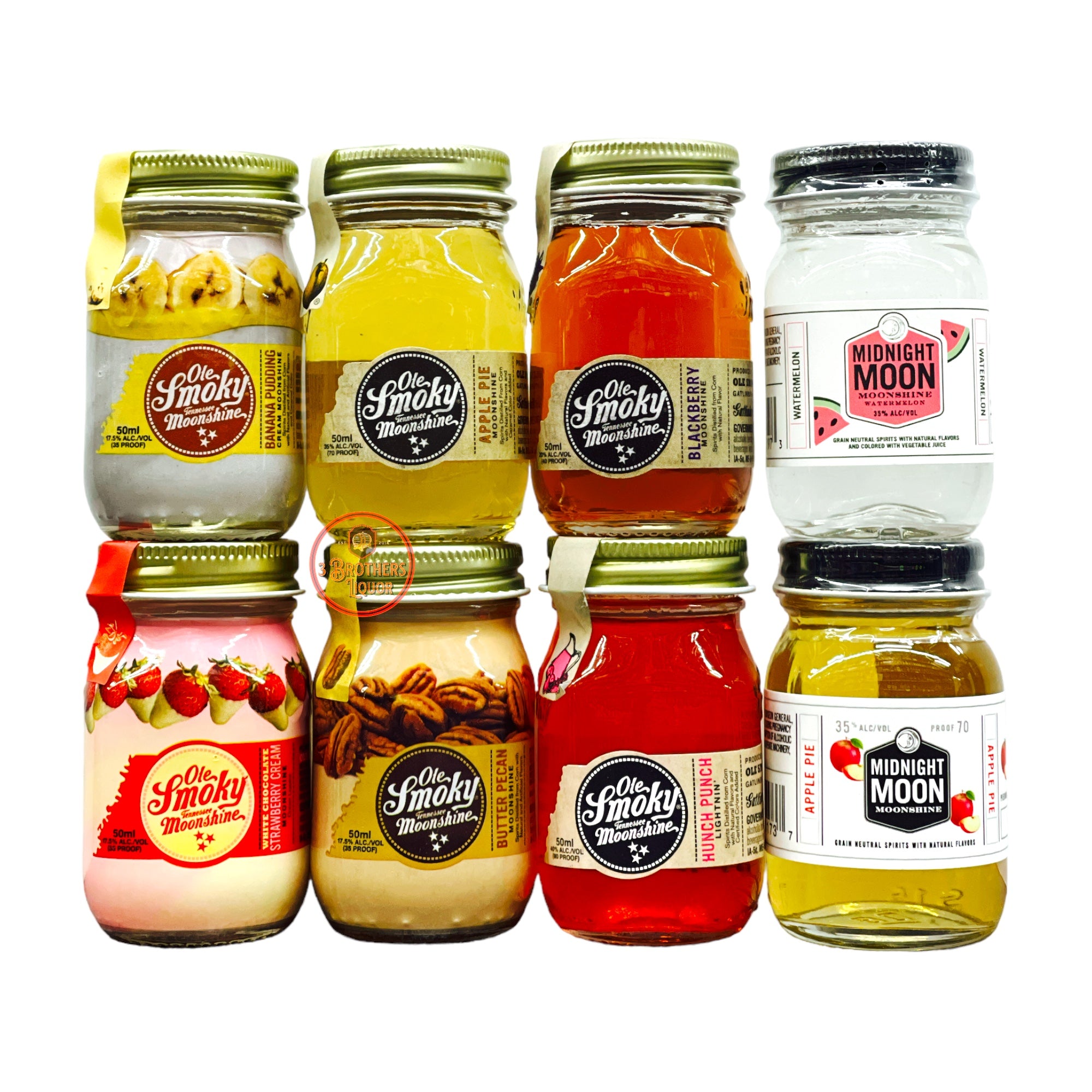
“Ole Smoky Moonshine 8Pk Bundle Tasting …” from 3brothersliquor.com and used with no modifications.
Raw moonshine, straight from the still, contains volatile compounds that create that characteristic “burn.” This isn’t simply the alcohol content – it’s a complex mixture of compounds including fusel alcohols, aldehydes, and other congeners formed during fermentation and distillation. These compounds are responsible for that distinctive throat-burning sensation that makes fresh moonshine challenging to enjoy. To understand more about these processes, learn about the main parts of a still used in moonshine production.
Aging fundamentally changes this chemical makeup. The process allows time for these harsh compounds to either evaporate through the barrel’s pores, transform through oxidation, or interact with wood components to create new flavor compounds. What was once fierce and fiery becomes mellow and complex.
The transformation isn’t just about eliminating unpleasant characteristics – it’s about developing desirable ones. Proper aging develops notes of caramel, vanilla, toast, spice, and fruit that simply don’t exist in fresh distillate. The spirit becomes more than the sum of its parts.
- Fresh moonshine contains harsh volatile compounds
- Aging allows these compounds to evaporate or transform
- Wood interaction introduces desirable flavor compounds
- Oxidation creates smoothness and complexity
- Temperature fluctuations accelerate the extraction process
Why Raw Moonshine Burns (And How Aging Fixes It)
That infamous moonshine burn comes primarily from aldehydes, esters, and fusel alcohols – byproducts of fermentation that make it through the distillation process. While careful distilling technique can minimize these compounds, aging is the most effective way to tame them. During aging, these molecules gradually break down or bond with oxygen and wood compounds to create smoother, more palatable flavors.
Think of aging as a chemical filtration system. The wood’s porous structure traps larger, harsher molecules while allowing ethanol and water to pass through. Simultaneously, beneficial compounds like vanillin, guaiacol, and tannins leach from the wood, adding complexity. This transformation isn’t immediate – it takes time for these chemical reactions to reach completion.
The Difference Between Fresh and Aged Moonshine
Fresh moonshine is characterized by its crystal clarity and pronounced ethanol bite. It typically has a simple, grain-forward flavor profile that highlights the base ingredients but lacks depth. When properly made, it can be clean and serviceable, but rarely complex. For those interested in exploring traditional recipes, here’s a traditional corn-based moonshine recipe to try at home.
“Fresh moonshine showcases your distilling skill. Aged moonshine showcases your patience.” – Old distiller’s proverb
Aged moonshine develops amber to deep mahogany coloring depending on duration and barrel char level. The aroma shifts from sharp and alcohol-forward to rich with notes of vanilla, caramel, dried fruit, and spice. Most importantly, the mouthfeel transforms from thin and harsh to silky and substantial, with a finish that lingers pleasantly rather than burning.
Aging Timeframes for Different Moonshine Types

“Barrel Aged Moonshine/Whiskey …” from www.youtube.com and used with no modifications.
Not all moonshine follows the same aging timeline. The appropriate aging period depends heavily on your desired end product. From crystal-clear traditional ‘shine to richly colored whiskey-style spirits, each category has its own ideal maturation period.
Clear Moonshine: Minimal Aging (3-14 Days)
Traditional clear moonshine requires the least aging time of all styles. After distillation, allowing the spirit to rest for just 3-14 days can significantly improve quality. This brief resting period allows harsh volatiles to dissipate and the flavors to integrate. You’ll notice the difference between day-old moonshine and two-week-rested shine immediately – the burn subsides while the grain character becomes more pronounced.
This type of moonshine isn’t typically aged in wood at all. The goal is to preserve the clean, grain-forward profile while eliminating only the harshest elements. Store it in glass containers away from direct sunlight, giving it an occasional gentle shake to help volatile compounds escape.
Flavored Moonshine: Short Aging (2-8 Weeks)
Fruit-infused and flavored moonshines benefit from a middle-ground approach to aging. After adding your flavoring agents (fruits, spices, etc.), these spirits typically need 2-8 weeks to develop fully integrated flavor. This timeframe allows the alcohol to extract flavors while also mellowing enough to let those flavors shine through.
For apple pie moonshine, cinnamon stick moonshine, and other popular variations, wood aging is optional. If you do choose to use oak, a brief exposure of 2-4 weeks with oak chips or spirals adds complexity without overwhelming the added flavors. The sweet spot for most flavored moonshines comes around the one-month mark, when harshness has subsided but fruit flavors remain bright.

Whiskey-Style Moonshine: Extended Aging (3-24 Months)
When creating a whiskey-style aged moonshine, patience becomes your most valuable ingredient. These spirits require extended contact with oak to develop the rich caramel, vanilla, and spice notes that define aged whiskey. In small barrels (1-5 gallons), noticeable transformation begins at 3 months, with excellent results typically appearing between 6-12 months.
The aging curve isn’t linear – the most dramatic changes occur in the first few months, with increasingly subtle refinements thereafter. Many home distillers find their sweet spot between 6-12 months in small barrels, though some patience-rich individuals extend aging to 18-24 months for maximum complexity. Beyond two years, the benefits can diminish as the spirit becomes overly woody, particularly in small barrels.
When Is It Actually “Whiskey” Instead of Moonshine?
The line between aged moonshine and whiskey becomes increasingly blurred the longer you age. While legal definitions vary by country, the general consensus is that once corn-based moonshine has been aged in charred oak barrels for a significant period (typically months to years), it has effectively become whiskey. The term “moonshine whiskey” bridges this gap, acknowledging both its illicit heritage and its transformed character.
For many distillers, the distinction is academic – what matters is the quality of the finished spirit. If you’re aging for more than 6 months in charred oak, you’re creating something that’s whiskey in all but the most technical legal sense. By the 12-month mark in a properly prepared small barrel, most would consider the transformation complete.
Barrel Size: The #1 Factor in Aging Speed

“Barrel of Moonshine Stock Vector by …” from depositphotos.com and used with no modifications.
When it comes to aging timeline, no factor matters more than the size of your aging vessel. The physics is simple: smaller barrels create more wood contact per volume of spirit, dramatically accelerating the aging process. This surface-area-to-volume ratio explains why commercial distilleries use massive barrels and age for years, while home distillers can achieve similar results in months. For more insights, check out this guide on how long to age moonshine in oak barrels.
This isn’t just a matter of convenience – it fundamentally changes the aging dynamic. Small barrels extract wood compounds faster but don’t allow as much time for slow oxidation processes. Large barrels provide gentler wood extraction but allow more time for complex chemical reactions to develop.
Small Barrels (1-5 Liters): Fast Aging
The smallest aging vessels create the most rapid transformation. In 1-5 liter barrels, moonshine can take on significant color and wood character in just 2-3 months. The high surface-area-to-volume ratio means nearly every molecule of moonshine maintains frequent contact with the oak, rapidly extracting flavors and filtering out harsh compounds.
While convenient, these small vessels require careful monitoring to prevent over-oaking. Check your spirit weekly after the first month, as it can cross from “not quite ready” to “over-oaked” surprisingly quickly. These barrels excel for experimental batches where you’re testing different techniques or for creating quickly-aged spirits when time is limited.
Medium Barrels (5-20 Liters): Balanced Aging
The sweet spot for many home distillers lies in the 5-20 liter range. These barrels provide enough surface area for efficient aging without the risk of rapid over-extraction. A 5-gallon barrel (approximately 19-liter) typically produces excellent results in 6-12 months, with peak quality often appearing around the 9-month mark for whiskey-style spirits.
These mid-sized barrels allow enough time for both wood extraction and oxidative aging processes to occur. The result is often more balanced than extremely quick-aged spirits, with better integration of flavors and a smoother overall character. For serious home distillers, this size represents an ideal compromise between aging efficiency and quality.

Large Barrels (20+ Liters): Slow, Complex Aging
Large barrels most closely replicate commercial aging conditions, requiring significant patience but potentially delivering the most complex results. In barrels larger than 20 liters, expect to wait at least 12-24 months before your moonshine approaches full maturity, with some batches continuing to improve for 3+ years.
The reduced surface-area-to-volume ratio means wood extraction happens slowly and gently, allowing other aging processes to occur simultaneously. Oxygen exchange through the wood creates subtle oxidative notes, while slow evaporation concentrates flavors and reduces harshness. For those with the patience, these larger vessels can produce remarkably complex spirits with nuances that quick-aging methods simply cannot replicate.
Oak’s Magic: How Wood Changes Your Moonshine

“Wooden Whiskey Barrel Wine Barrel …” from www.amazon.com and used with no modifications.
The transformation of moonshine in oak is nothing short of magical. What begins as a clear, fiery spirit gradually becomes a complex, amber elixir through a series of chemical processes. Understanding these interactions helps explain why patience yields such remarkable rewards during aging.
Oak contains hundreds of extractable compounds that influence your moonshine’s flavor, aroma, and texture. The wood’s structure also plays a crucial role, with its semi-porous nature allowing controlled oxygen exchange while filtering out unwanted compounds. Each element of the wood contributes something unique to the final character of your aged moonshine.
Flavor Compounds Released During Aging
Oak contains a treasure trove of flavor compounds that transform your moonshine over time. Lignin breaks down into vanillin, giving that classic vanilla character. Hemicellulose decomposes into sugars that caramelize, creating notes of caramel, toffee, and toasted marshmallow. Tannins add structure and astringency that balances sweetness, while lactones contribute the coconut and woody notes that develop with extended aging.
The extraction happens in stages rather than all at once. The first compounds to emerge are often the tannic and woody notes, which is why very briefly aged moonshine can sometimes taste overly astringent. With additional time, the vanilla, caramel and spice notes begin to develop and integrate. The final stage brings the subtle fruit and floral notes that only appear with extended aging. Each stage builds upon the previous ones, creating increasingly complex layers of flavor.
Color Development Timeline
The amber hue of aged moonshine develops progressively and serves as a visual indicator of aging progress. In a new charred barrel, expect significant color development within the first month, transitioning from clear to pale straw within weeks, then deepening to amber by months 2-3. The color continues to intensify through months 4-6, reaching mahogany tones in heavily-charred barrels by the 6-12 month mark. This progression slows over time but never completely stops, with some spirits developing almost black hues after many years.
How Charring Level Affects Aging Speed
The level of char inside your barrel dramatically influences both aging speed and flavor development. Heavy char (#3 or #4) creates a layer of activated carbon that filters impurities more quickly and imparts intense caramel, vanilla and smoke notes. This accelerates the aging process, allowing spirits to mature faster but potentially with less subtlety. Lighter char levels (#1 or #2) work more slowly but can produce more nuanced flavors, preserving more of the grain character while still providing wood influence. For most home distillers seeking faster aging, a #3 char offers the ideal balance of filtration, flavor development, and aging efficiency. Learn more about how long to age whiskey or moonshine in oak barrels.
Environmental Factors That Speed Up or Slow Down Aging

“aging. Factors accelerating aging …” from www.researchgate.net and used with no modifications.
Beyond barrel size and char level, environmental conditions play a crucial role in determining how quickly your moonshine matures. The aging environment acts as an invisible hand guiding the development of your spirit, sometimes accelerating the process dramatically and other times slowing it to a crawl. By controlling these factors, you can significantly influence both the timeline and character of your aged moonshine.
Temperature Effects: Why Warm Storage Ages Faster
Temperature is perhaps the most powerful environmental factor affecting aging speed. Warmer temperatures (75-85°F) cause the wood to expand, allowing deeper penetration of the spirit into the barrel staves while accelerating chemical reactions. This can reduce aging time by 30-50% compared to cooler storage, with moonshine aged in warm environments often reaching maturity in half the time. However, this acceleration comes with trade-offs, as heat-accelerated aging tends to extract more aggressive wood compounds while potentially allowing less time for oxidation and esterification processes that contribute subtlety.
Humidity’s Role in Barrel Aging
Humidity influences the direction of alcohol movement through barrel walls. Low humidity environments (below 50%) accelerate water loss, concentrating alcohol and flavors but reducing overall volume more quickly – this is known as the “angels’ share.” High humidity environments (above 70%) have the opposite effect, preserving volume while potentially diluting flavors slightly as proportionally more alcohol evaporates than water. For balanced aging, aim for 60-65% relative humidity, which allows some concentration effect without excessive volume loss.

Air Exposure and Oxidation
Controlled oxidation is a vital component of proper aging, softening harsh flavors while developing complexity. Barrels naturally allow minimal oxygen exchange through their semi-porous structure, but you can influence this process. Occasionally opening the barrel to check progress introduces oxygen bursts that can accelerate certain aspects of aging. Some distillers use techniques like “breathing” (periodically removing and replacing the bung) or “rolling” (rotating the barrel to increase liquid movement) to enhance oxygen exposure. Be cautious though – excessive air exposure can create overly oxidized flavors reminiscent of nail polish remover or glue.
Quick Aging Techniques: Do They Actually Work?
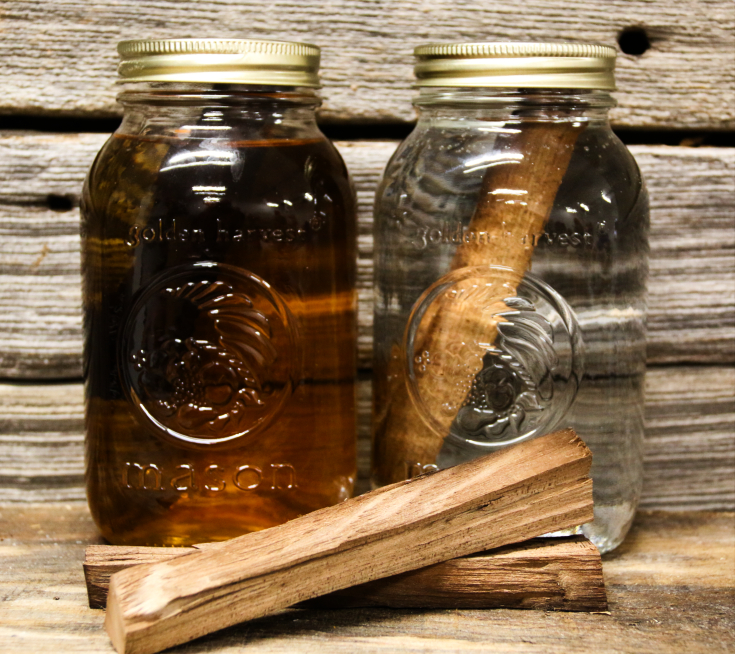
“Aging Homemade Whiskey – A Complete …” from learntomoonshine.com and used with no modifications.
For the impatient distiller, various accelerated aging techniques promise to compress years of maturation into weeks or even days. While none truly replicate the complexity of traditional aging, some can produce surprisingly good results when used thoughtfully. These methods typically focus on increasing wood surface contact, applying pressure or ultrasonic waves, or manipulating temperature to extract flavors more rapidly. For those interested in traditional methods, you might explore this corn-based moonshine recipe as a starting point.
Oak Chips vs. Barrel Aging: Time Comparison
Oak chips, cubes and spirals offer dramatically increased surface area compared to barrel staves, potentially reducing aging time by 75% or more. A spirit that might take 6 months in a small barrel could show significant wood character in just 4-6 weeks with oak chips. However, this rapid extraction comes at a cost – chips provide wood flavor but minimal filtration and oxygen exchange. The result is often a spirit with pronounced oak flavors but less of the smoothness and integration that comes from barrel aging. For best results, combine chips with micro-oxygenation techniques that mimic the oxygen exchange of traditional barrels.
Ultrasonic Aging: Science or Gimmick?
Ultrasonic aging uses sound waves to create microscopic cavitation bubbles that agitate the spirit at the molecular level, forcing it into intense contact with wood. Proponents claim it can compress years of aging into days, and research shows it does accelerate extraction of wood compounds significantly. Commercial ultrasonic units designed for spirits can produce noticeable wood character in just 24-48 hours, though the results lack the integration and complexity of naturally aged spirits. This technique works best as a “head start” before traditional aging rather than a complete replacement.
Pressure Aging Methods
Pressure aging applies increased atmospheric pressure to force spirits deeper into wood pores, accelerating extraction. Some commercial operations use pressure-cycling techniques that claim to simulate years of barrel aging in weeks. Home distillers have experimented with modified pressure cookers and other DIY approaches, though with varying success. While pressure does increase wood extraction rates, it doesn’t necessarily accelerate the oxidation and esterification processes that contribute to aging complexity. The results tend to be wood-forward but potentially one-dimensional compared to traditionally aged spirits.
Heat Cycling: The Old Timer’s Trick
Long before modern acceleration techniques, distillers knew that temperature fluctuations enhance aging. By cycling between warm days and cool nights, spirits naturally move in and out of the barrel wood, extracting more compounds with each cycle. You can recreate this effect by moving your aging container between environments – perhaps from a warm room during the day to a cooler basement at night, or using heating pads on a timer. A consistent cycle of 10-15°F temperature variation can potentially reduce aging time by 30-40% while maintaining better flavor integration than constant high heat.
Signs Your Moonshine Is Perfectly Aged

“Aging Moonshine or Un-Aged Whiskey At …” from redheadoakbarrels.com and used with no modifications.
Knowing when your moonshine has reached its peak is as much art as science. The perfect moment varies based on personal preference, original distillate character, and your aging goals. Rather than focusing solely on time, learn to recognize the sensory cues that indicate when your spirit has reached its sweet spot – that magical window where harshness has disappeared but the wood hasn’t yet dominated.
Visual Cues: Color and Clarity
Well-aged moonshine exhibits rich amber to mahogany color with exceptional clarity – no cloudiness or floating particles should be present. When swirled in a glass, it should leave “legs” that slowly descend, indicating developed glycerol content and proper viscosity. The color should appear consistent throughout, with no separation or layering, showing complete integration of wood compounds.
Beyond basic color, examine how light interacts with your aged spirit. Hold it up to natural light – properly aged moonshine has a certain luminosity, with light penetrating the liquid rather than simply reflecting off the surface. This visual depth indicates the presence of complex compounds that have fully integrated into the spirit, creating the multi-faceted character that distinguishes truly great aged moonshine.
Aroma Development Timeline
Your nose provides the most reliable timeline for aging progress. Fresh moonshine presents primarily sharp, ethanol-forward aromas with simple grain notes. After 1-2 months in wood, vanilla and caramel notes emerge, though often disconnected from the base spirit. By 3-6 months, these aromas integrate more completely, with fruit and spice notes developing. The 6-12 month period brings aromatic complexity and harmony, with multiple layers of scent that unfold gradually rather than hitting all at once. When your moonshine offers a bouquet that keeps revealing new elements with each sniff rather than a single dominant note, it’s approaching peak maturity.

Taste Testing Throughout the Aging Process
Regular tastings provide the ultimate guide to your moonshine’s development. Sample every few weeks initially, then less frequently as aging progresses. The first major milestone comes when the harsh alcohol bite transforms into gentle warmth – typically within the first 2-3 months in a small barrel. Next, watch for the development of mid-palate richness, where initial flavors expand across your entire tongue rather than hitting in isolated spots. The final stage is the development of a lengthy, complex finish that evolves after swallowing, revealing different flavor notes in succession. When you find yourself discovering new flavors with each sip and the finish lingers pleasantly for 30+ seconds, your moonshine has likely reached its peak aging potential.
Your First Aging Project: Getting Started Right

“Home Distilling of Moonshine Liquor …” from www.amazon.com and used with no modifications.
Embarking on your first moonshine aging journey is exciting but can feel overwhelming with so many variables to consider. Start with a clear understanding of your desired end product, realistic timeline expectations, and the proper equipment. Remember that every aging project is a learning experience – keep detailed notes on your process and results to build knowledge for future batches. Even if your first attempt isn’t perfect, you’ll gain valuable skills that improve each subsequent batch.
Selecting the Best Container for Your Timeline
Match your container choice to your patience level and desired outcome. For quick results within 2-3 months, opt for a 1-2 liter charred oak barrel or use oak chips in a glass container. For balanced aging with moderate time investment (6-12 months), a 5-gallon barrel provides ideal conditions. If you’re creating a special batch worth extended aging, consider a 10-15 gallon barrel that will develop more complexity over 1-3 years. Oak Wood Wine Barrels offers an excellent selection of properly prepared aging vessels in various sizes, each accompanied by specific guidelines for expected aging timelines.
Setting Up Proper Storage Conditions
Create an aging environment that balances efficiency with quality development. Ideal conditions include stable temperatures between 65-75°F (slightly warmer accelerates aging, cooler slows it), moderate humidity (60-65%), protection from direct sunlight, and minimal temperature fluctuations. A dedicated cabinet, closet, or basement corner often works perfectly. Avoid garages and attics where temperature swings can be extreme, potentially damaging your barrel and creating inconsistent aging conditions. For small barrels especially, place a tray beneath to catch any potential leaks as the wood expands and contracts during initial fill.
Sample Taking Schedule (Without Ruining Your Batch)
Monitoring your moonshine’s progress requires systematic sampling, but removing too much too often can accelerate oxidation and evaporation. For small barrels (1-5 liters), take 10-15ml samples every two weeks initially, then monthly once color development stabilizes. For medium barrels (5-20 liters), begin monthly sampling after the first month, then extend to every 6-8 weeks after 3 months of aging. Use a whiskey thief or turkey baster dedicated exclusively to spirits sampling, and always return unused portions to the aging vessel to maintain volume. Keep dated notes on each sample’s appearance, aroma, and taste to track development and identify the optimal stopping point.
Consider keeping a small amount of your original unaged spirit as a reference point. This allows you to directly compare your aged product against the starting material, highlighting the transformative effects of the aging process. This side-by-side comparison often proves enlightening, especially when sharing your creation with friends who haven’t tasted the original moonshine.
Frequently Asked Questions
Through years of guiding distillers through the aging process, certain questions arise consistently. The following answers address the most common concerns about moonshine aging, helping you avoid pitfalls that might compromise your hard work. Remember that aging is both science and art – these guidelines provide a starting point, but your personal experience and preference will ultimately define your approach.
Keep in mind that regulations surrounding home distillation vary by country and region. While this information is provided for educational purposes, always ensure you’re operating within local laws regarding spirit production and aging.
Can moonshine be over-aged?
Yes, moonshine can absolutely be over-aged, particularly in small barrels. The high surface-area-to-volume ratio of small vessels can lead to excessive wood extraction, creating a spirit that tastes primarily of oak rather than a balanced expression of the original distillate. Signs of over-aging include dominant bitter tannins, overwhelming vanilla notes that mask grain character, and a drying astringency that lingers unpleasantly. In 1-5 liter barrels, over-aging can occur in as little as 6-8 months, while 5-10 gallon barrels typically resist over-aging for at least a year.
If you suspect your moonshine is approaching over-aging, you have several options. The simplest is to bottle immediately, halting the wood interaction. Alternatively, you can dilute with some unaged spirit to reduce wood intensity, or transfer to an inert container like glass for a “resting period” that allows flavors to integrate without additional extraction. With experience, you’ll develop a sense for when your spirits are approaching their peak, allowing you to bottle at the optimal moment.
Is it legal to age my own moonshine at home?
The legality of aging home-distilled spirits varies significantly by country and jurisdiction. In the United States, federal law prohibits distilling alcohol for beverage purposes without proper permits, regardless of whether it’s for personal consumption or sale. This prohibition extends to aging such spirits. However, aging commercially purchased neutral spirits with oak chips or in barrels typically falls into a legal gray area that many hobbyists explore. Some countries, including New Zealand and certain European nations, allow limited home distillation for personal consumption, which would include aging those spirits.
This information is provided for educational purposes only. If you’re interested in aging spirits at home, research your local regulations carefully or consider legal alternatives like aging store-bought neutral spirits or creating rapidly infused products using legal techniques. Oak Wood Wine Barrels provides barrels for various legal aging projects, including commercially produced spirits, wines, and other beverages.
How much moonshine should I expect to lose during aging?
Evaporation loss during aging – often called the “angels’ share” – is inevitable and varies based on barrel size, ambient conditions, and aging duration. In small barrels (1-5 liters), expect to lose 10-15% in the first three months and potentially 25-30% over a full year. Medium-sized vessels (5-20 liters) typically lose 5-10% in the first six months and 15-20% annually. These losses accelerate in warm, dry environments and slow in cool, humid conditions. New barrels also tend to lose more initially as the wood absorbs its first fill, with subsequent batches experiencing more moderate losses. For creative ways to present your aged spirits, explore these moonshine packaging ideas.
Can I reuse barrels for multiple batches of moonshine?
Barrels can absolutely be reused, though each use changes their aging characteristics. First-fill barrels provide the most intense wood extraction and color development, while subsequent uses offer progressively subtler effects. The general rule of thumb for aging times in used barrels is discussed in detail in this guide on aging moonshine.
- First use: 100% of base aging time (e.g., 6 months for a small barrel)
- Second use: 125-150% of base aging time (7-9 months)
- Third use: 200-250% of base aging time (12-15 months)
- Fourth+ use: Primarily for subtle flavoring or long-term aging projects
To rejuvenate a barrel after multiple uses, some distillers perform a light re-char by briefly burning the interior with a torch, followed by thorough cleaning. This exposes fresh wood layers and can restore some of the barrel’s extractive potential. Alternatively, adding oak chips to an older barrel combines the benefits of oxidative aging with renewed wood interaction. For more insights on barrel aging, you can explore this guide on aging whiskey and moonshine.
Many distillers intentionally plan a progression of spirits through their barrels, starting with lighter spirits like corn whiskey, then following with darker spirits like bourbon, and finally finishing with deeply flavored products like rum or port-style fortified wines that benefit from the residual flavors of previous fills.
Do I need to filter moonshine after aging?
Filtering after aging is typically unnecessary and potentially counterproductive for barrel-aged moonshine. The barrel itself acts as a natural filter, with charred oak removing many impurities during the aging process. Once aged, your moonshine should be clear and free of particles when properly racked off any sediment that may have accumulated. Filtering through activated carbon or other aggressive methods would strip away the very compounds that aging has developed, diminishing the complexity you’ve worked to create.
If you do encounter cloudiness or floating particles after aging, the least invasive approach is cold stabilization – chilling the spirit to near freezing temperatures for 48 hours, then carefully decanting off the cleared liquid. For spirits aged with oak chips rather than in barrels, a simple straining through cheesecloth or coffee filters is sufficient to remove the wood pieces without affecting flavor compounds that have already been extracted.
With patience and attention to detail, your aged moonshine will reward you with complexity and character impossible to achieve through shortcuts. Whether you’re aging for months or years, the transformation from harsh white dog to smooth amber spirit represents one of distilling’s most magical processes – turning time itself into flavor.
For premium oak barrels and expert guidance on your aging journey, visit Oak Wood Wine Barrels and discover how their specially crafted aging vessels can transform your moonshine into something extraordinary.