Infused Moonshine Recipes: 4 Delicious Recipes For Beginners

Key Takeaways
- Infusing moonshine is a simple way to create custom flavored spirits without needing distillation equipment, perfect for beginners.
- Store-bought neutral spirits like Everclear provide a legal base for making infused “moonshine” at home.
- The best moonshine infusions typically require just 2-5 days of steeping time for optimal flavor development.
- Mason jars are the ideal vessels for both infusing and storing your homemade flavored moonshine creations.
- MoonshineRecipes.com offers expert guidance on craft spirits, helping beginners create professional-quality infused moonshine at home.
Creating your own flavored spirits at home doesn’t require a hidden still in the mountains or complex distillation equipment. Infused moonshine recipes offer a perfect entry point for beginners looking to craft custom spirits with minimal equipment and maximum flavor. The process is remarkably straightforward: combine high-proof neutral spirits with flavorful ingredients, let them mingle for a few days, and you’ve created something truly special that rivals commercial products.
The art of infusing moonshine has evolved from backwoods necessity to modern culinary craft. Today’s home brewers are experimenting with everything from traditional fruits to exotic spices and even candy to create unique signature spirits. The beauty lies in the simplicity – with just two or three ingredients and a little patience, you can transform ordinary alcohol into extraordinary sipping spirits or cocktail foundations.
“Infused moonshine is where science meets art. The high-proof alcohol extracts flavors and compounds that water alone cannot, creating complex flavor profiles from simple ingredients.” – Modern Distiller Magazine
Transform Plain Moonshine Into Delicious Flavored Spirits

“Tennessee Legend Apple Pie Moonshine …” from gacraftspirits.com and used with no modifications.
Moonshine, in its traditional form, is simply unaged whiskey – clear, potent, and often lacking the refined flavors that come with proper aging. But that blank canvas offers endless possibilities for creative infusions. Think of store-bought moonshine or high-proof neutral spirits as your empty palette, waiting for you to add colors, textures, and dimensions through careful infusion.
The transformation happens when you introduce flavoring agents – whether sweet fruits, warming spices, or decadent sweets – to the alcohol. Over time, the moonshine extracts the essential oils, sugars, and flavor compounds from your chosen ingredients. What starts as harsh, one-dimensional alcohol evolves into a complex, aromatic spirit with layers of flavor that unfold as you sip. The best part? This process happens naturally, requiring minimal intervention beyond combining the ingredients and having patience.
While commercial flavored spirits often contain artificial additives and excessive sweeteners, your homemade infused moonshine will showcase pure, authentic flavors. The difference is immediately noticeable – natural strawberry moonshine tastes like real strawberries, not artificial strawberry candy. Apple pie moonshine captures the essence of freshly baked pie, from the fruit to the crust to the spices. When friends taste your creations, they’ll be amazed at the depth and authenticity of flavor you’ve achieved with simple ingredients and techniques.
- Infused moonshines make excellent gifts for special occasions
- Custom flavors allow you to create spirits tailored to individual preferences
- The process requires minimal equipment and technical knowledge
- Homemade infusions avoid artificial ingredients found in commercial products
- You control the sweetness level and flavor intensity
Legal Store-Bought Moonshine vs. Homemade
Before diving into recipes, let’s clarify something important: traditional moonshine distillation remains illegal without proper permits in the United States and many other countries. However, infusing commercially available high-proof alcohol is perfectly legal and serves as our foundation for these recipes. Companies like Ole Smoky, Midnight Moon, and White Hat now produce legal, commercially available “moonshine” – essentially unaged corn whiskey or neutral spirits – that provide an excellent base for your infusions.
For the purposes of these recipes, we’ll be using store-bought high-proof spirits like Everclear (151-190 proof), Mohawk, or Nikolai as our base. These products deliver the neutral canvas and potent alcohol content needed for effective infusion without requiring any illegal distillation. When shopping, look for the highest proof available in your area (some states restrict sales above certain alcohol percentages). The higher the proof, the more effective the extraction process will be, though anything above 100 proof will work for our purposes. Many liquor stores carry these products, making them readily accessible for your infusion projects.
Basic Supplies You’ll Need
One of the appealing aspects of making infused moonshine is the minimal equipment required. You likely already have most of what you need in your kitchen. Mason jars are the workhorses of moonshine infusion – their airtight seals, wide mouths, and clear glass make them perfect for both the infusion process and attractive storage afterward. Quart-sized jars work well for most recipes, though half-gallon versions are useful for larger batches. The classic Ball or Kerr canning jars are ideal, but any glass container with a tight seal will work in a pinch. For those interested in expanding their knowledge, you might want to explore the packaging ideas for aged moonshine as well.
Beyond jars, you’ll want a fine-mesh strainer and possibly some cheesecloth or coffee filters for straining your finished infusions. A funnel makes transferring liquids easier, and measuring cups ensure consistent results. For some recipes, a candy thermometer helps when working with sugar syrups. You’ll also need basic kitchen tools like knives, cutting boards, and mixing spoons. The beauty of moonshine infusion is its accessibility – no specialized brewing equipment necessary, just common kitchen items and ingredients. If you’re interested in exploring traditional methods, you might enjoy learning about a traditional corn-based moonshine recipe.
| Essential Supplies | Nice-to-Have Items | Optional Upgrades |
|---|---|---|
| Mason jars with lids | Fine mesh strainer | Decorative bottles |
| Measuring cups | Cheesecloth/coffee filters | Personalized labels |
| Funnel | Candy thermometer | Flavor extracts |
| Kitchen knife | Citrus zester | Vanilla beans |
What Makes Infused Moonshine Special?

“Ole Smoky Infused Peaches Moonshine Jar …” from www.doordash.com and used with no modifications.
What separates infused moonshine from other homemade drinks is the remarkable extraction power of high-proof alcohol. When you soak ingredients in 151+ proof spirits, you’re not just flavoring the liquid – you’re performing an efficient botanical extraction. The alcohol molecules bind with flavor compounds, essential oils, and colorful pigments that water alone cannot extract. This creates infusions with intensity and complexity that other methods simply can’t match. This is why herbalists have used alcohol tinctures for centuries – alcohol captures the essence of plants more effectively than almost any other medium.
The Art of Flavor Extraction
The magic of moonshine infusion lies in the solvent properties of ethanol. High-proof alcohol breaks down cell walls in fruits, dissolves essential oils in spices, and extracts compounds that water simply can’t touch. This extraction process happens passively as your ingredients steep, creating complex layered flavors that develop over time. Unlike cooking, where heat can alter flavor compounds, cold infusion in alcohol preserves delicate notes that might otherwise be lost.
Different ingredients release their flavors at different rates. Fresh berries might fully infuse in just 3-4 days, while tougher items like cinnamon sticks or vanilla beans might take a week or longer. The process isn’t merely about waiting—it’s about monitoring. Taste your infusion regularly (using just a small spoonful) to track its progression. Some ingredients can become bitter or overpowering if left too long, while others continue to develop pleasant complexity over extended periods.
Temperature also plays a critical role in extraction speed and quality. While room temperature works well for most infusions, some benefit from refrigeration (like delicate herbs) while others extract more efficiently with gentle warming (like tough spices or caramel). Gentle daily agitation—simply turning the jar or giving it a gentle swirl—helps distribute the ingredients and ensures even extraction throughout the liquid.
Safety Tips When Working With High-Proof Alcohol
Working with high-proof spirits requires some basic safety precautions. First and foremost, keep open containers away from flames, heat sources, and sparks—190 proof alcohol is extremely flammable. Always work in a well-ventilated area to avoid inhaling concentrated alcohol vapors, which can cause dizziness or respiratory irritation. Keep infusions out of reach of children and pets, clearly labeled as alcohol to prevent accidental consumption.
When tasting your infusions during development, use small amounts—high-proof alcohol can be overwhelming if sampled directly. Consider diluting a small testing portion with water to better evaluate the flavor profile. Wear gloves when handling ingredients like hot peppers, as the capsaicin becomes concentrated in the alcohol and can cause serious skin irritation if you touch your face afterward.
Mastering the Infusion Process
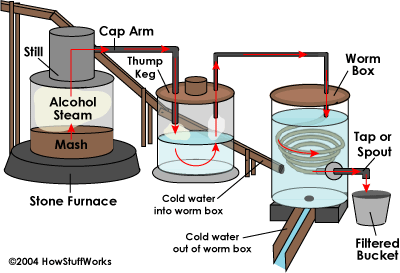
“How Moonshine Works – Walton’s Distillery” from www.waltonsdistillery.com and used with no modifications.
The basic infusion process follows a simple formula: combine your base spirit with flavoring ingredients in a sealed container, wait for the magic to happen, then strain and enjoy. But within this simplicity lies room for creativity and technique. Start by selecting quality ingredients—fresh fruits at peak ripeness, whole spices rather than pre-ground, and natural sweeteners like honey or maple syrup rather than artificial alternatives. The better your inputs, the more impressive your finished moonshine will be.
Preparation of ingredients significantly impacts your results. For fruits, removing stems, pits, and blemished areas prevents off-flavors. Cutting fruit increases surface area for better extraction—smaller pieces infuse faster but may create more sediment. For spices, lightly toasting them before infusion can wake up dormant oils and enhance their aromatic qualities. Discover more about spices for infused moonshine to enhance your creations. When using sweeteners, consider making a simple syrup rather than adding sugar directly, as this ensures proper dissolution and smooth texture.
Quick vs. Slow Infusion Methods
The traditional “set it and forget it” approach works beautifully for most infusions, but there are times when you might want to accelerate the process. For quick infusions, consider gently warming your base spirit (never over direct heat or flame!) before adding ingredients. The slight temperature increase speeds extraction without cooking off alcohol. Another rapid technique involves vacuum sealing your ingredients with the alcohol, which forces faster penetration and extraction through pressure changes.
Slow infusion, on the other hand, often produces more nuanced results. Allowing ingredients to steep at room temperature for several days to weeks gives flavors time to fully develop and integrate. This method works particularly well for complex flavor profiles like apple pie moonshine, where you want distinct notes of fruit, spice, and sweetness to harmonize. Slow infusion also allows for better filtration of particulates, resulting in a clearer final product.
Straining and Filtering Techniques
Once your infusion has reached peak flavor, proper straining ensures a clean, professional-quality result. Start with a coarse strainer to remove large solids, then progress to finer filtration methods. Coffee filters work excellently for home infusers, trapping tiny particles that might otherwise cloud your moonshine. For ultimate clarity, consider a two-stage filtering process: first through fine mesh, then through paper filters. Patience is key during filtering—rushing the process often leads to breakthrough of sediment. For more tips, check out these spices for infused moonshine.
If your infusion remains cloudy after filtering, don’t worry. This is usually caused by natural oils or fine particulates suspended in the alcohol. You can either embrace this “authentic” appearance or try cold-filtering—chilling the infusion in the refrigerator or freezer before straining. The cold causes some compounds to coagulate, making them easier to filter out. Just be aware that this might slightly alter the flavor profile by removing some desirable oils along with the cloudy elements.
Best Storage Practices
Properly stored, infused moonshine can maintain quality for months or even years. Dark, cool storage locations help preserve color and prevent flavor degradation from light exposure. Airtight containers are essential—as the seal weakens, alcohol can evaporate, changing the proof and potentially allowing oxidation. Mason jars with new lids provide excellent seals, though decorative bottles with tight-fitting stoppers also work well for gifting or display.
While refrigeration isn’t strictly necessary for high-proof infusions (the alcohol content prevents spoilage), it can help maintain freshness of fruit-based creations. Lower-proof infusions (below 20% alcohol/40 proof) should always be refrigerated to prevent mold growth. Date your creations and remember that different infusions have different shelf lives—berry infusions might peak within 3-6 months, while spice-based versions could continue to develop pleasantly for a year or more.
1. Caramel Moonshine: Smooth and Sweet
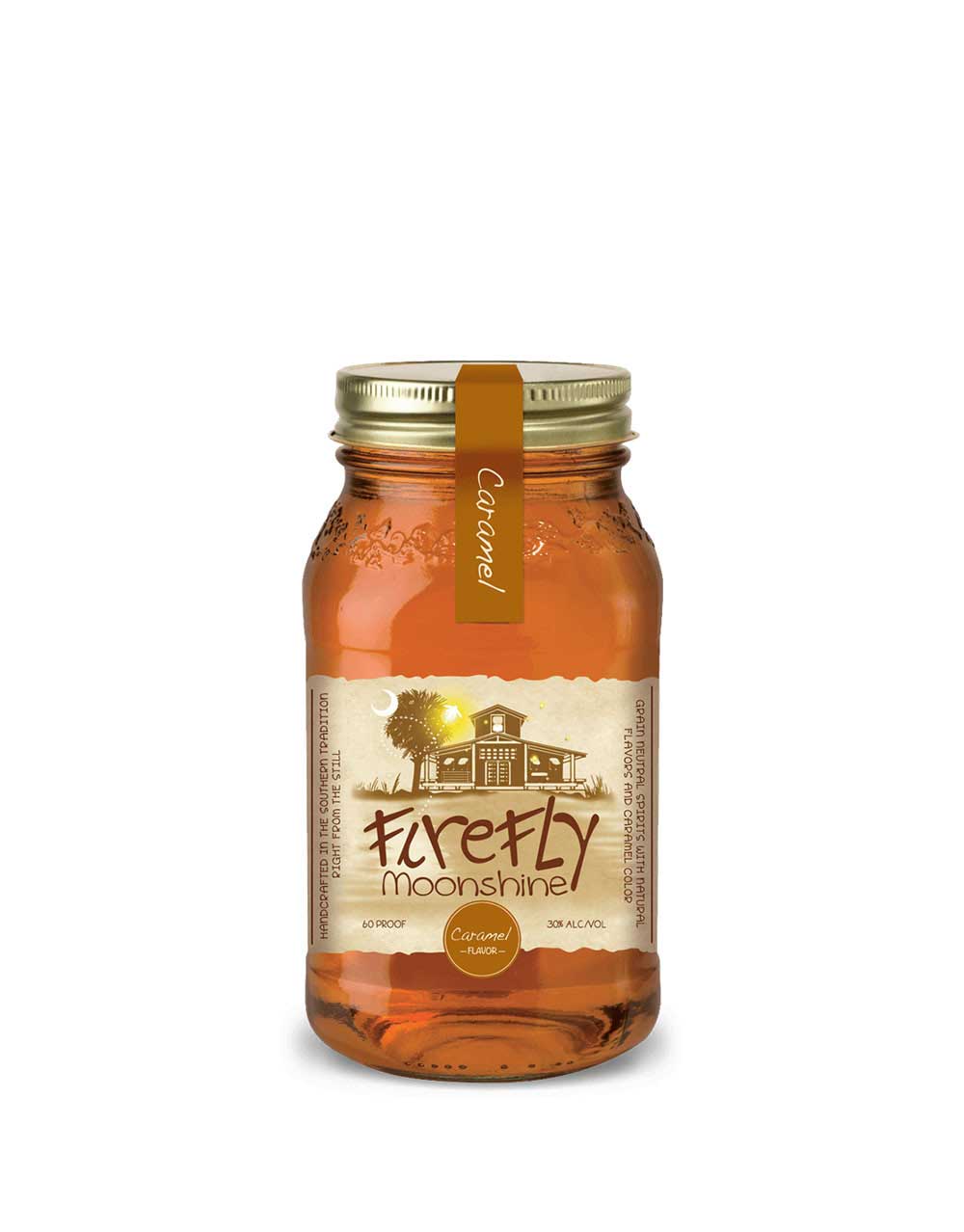
“Firefly Distillery Caramel Moonshine …” from www.royalbatch.com and used with no modifications.
Caramel moonshine delivers a silky, amber-hued spirit with complex notes of burnt sugar, vanilla, and toffee. This beginner-friendly recipe requires minimal ingredients yet produces sophisticated results that rival commercial caramel liqueurs. The transformation is remarkable—harsh clear alcohol becomes a smooth, sippable treat that works beautifully neat, on ice, or in cocktails. The caramelization process adds depth while tempering the alcohol burn, making this an excellent first infusion project.
Ingredients List
For this delectable caramel moonshine, you’ll need just three simple ingredients: 750ml of clear high-proof alcohol (Everclear or similar, 151-190 proof), 2 cups of granulated sugar for caramelizing, and 1 cup of water. That’s it! The magic happens in the transformation of ordinary sugar into complex caramel through careful heating. The caramelization process creates hundreds of flavor compounds from simple sucrose, each contributing nuanced notes to your finished moonshine. If you’re interested in exploring more about moonshine, check out this traditional corn-based moonshine recipe.
Step-by-Step Instructions
Begin by making your caramel base. In a heavy-bottomed saucepan, heat the sugar over medium heat until it begins to melt. Resist the urge to stir initially—simply swirl the pan occasionally to ensure even melting. As the sugar liquefies, it will progress from clear to golden to amber. Watch carefully, as the transition from perfect caramel to burnt sugar happens quickly! When you achieve a rich amber color (around 340°F if using a candy thermometer), remove from heat. If you’re interested in exploring more, check out these infused moonshine recipes for additional flavor ideas.
Very carefully add the water to the hot caramel—it will bubble and steam vigorously, so stand back to avoid burns. Return to low heat and stir until the caramel dissolves completely in the water, creating a smooth syrup. Allow this caramel syrup to cool completely before adding your moonshine. Combine the cooled caramel syrup with the high-proof alcohol in a large mason jar, seal tightly, and shake gently to incorporate. Let this mixture steep for 3-5 days, shaking daily, as the flavors meld and develop. For more inspiration, explore these infused moonshine recipes to try at home.
Perfect Pairings and Serving Ideas
Caramel moonshine shines as an after-dinner sipper, served neat in small cordial glasses or over a single large ice cube. For an elevated dessert experience, drizzle it over vanilla ice cream or bread pudding. It makes an exceptional addition to coffee—try it in place of Irish whiskey for a caramel Irish coffee topped with freshly whipped cream. For cocktails, pair it with apple cider and a cinnamon stick for a caramel apple delight, or mix with cola for a sophisticated twist on a classic combination.
2. Berry Blast Moonshine: Fruity and Fresh

“Berry Blast Moonshine Lemonade …” from rockpitbrewing.com and used with no modifications.
Berry-infused moonshine captures summer in a jar with its vibrant color and fresh fruit flavor. This versatile recipe works with virtually any berry—strawberries, blackberries, blueberries, raspberries, or a mixed berry blend—making it adaptable to whatever’s in season or available at your local market. The visual appeal is undeniable, with the clear alcohol transforming into jewel-toned ruby, purple, or crimson liquid that looks as beautiful as it tastes. Berry moonshine strikes the perfect balance between sweet fruit flavor and spirited kick.
Ingredient Options
Start with 750ml of clear high-proof alcohol (151-190 proof preferred) as your base. For the berries, you’ll need 2-3 cups of fresh berries—strawberries, blackberries, blueberries, raspberries, or a combination work perfectly. Fresh berries provide brighter flavor than frozen, though frozen can work in a pinch. Optional ingredients include 1/2 cup of simple syrup if you prefer a sweeter finish, a splash of lemon juice to brighten flavors, or complementary herbs like basil or mint for complexity (start with just 2-3 sprigs to avoid overwhelming the berry flavor).

Mixing and Infusion Guide
Prepare your berries by removing any stems, leaves, or blemishes. For strawberries, quarter the larger ones to increase surface area. Add prepared berries to a clean quart-sized mason jar, then pour the high-proof alcohol over them until completely covered. If using, add the simple syrup, lemon juice, or herb sprigs at this stage. Seal tightly and give the jar a gentle shake to combine ingredients. If you’re curious about other moonshine recipes, check out this traditional corn-based moonshine recipe.
Store your infusion in a cool, dark place for 3-5 days, shaking gently once daily to redistribute the ingredients. The alcohol will gradually extract color and flavor from the berries, transforming from clear to vibrantly colored. Taste test after 3 days—if the flavor is too mild, continue steeping for another day or two. Once you’re satisfied with the flavor intensity, strain through a fine-mesh sieve lined with cheesecloth or coffee filters to remove all berry particles. Transfer to clean bottles or jars for storage.
Cocktail Suggestions
Berry moonshine makes a stunning base for summer cocktails. Try a Berry Moonshine Lemonade by combining 1.5oz of berry moonshine with 4oz lemonade over ice, garnished with fresh berries and mint. For a sophisticated sipper, mix berry moonshine with prosecco or champagne for a Berry Royale. It also pairs beautifully with ginger beer or ginger ale for a Berry Moscow Mule—serve in a copper mug with lime wedge and mint sprig. For brunch gatherings, add a splash to mimosas for a berry-forward twist on the classic.
3. Apple Pie Moonshine: A Classic Favorite
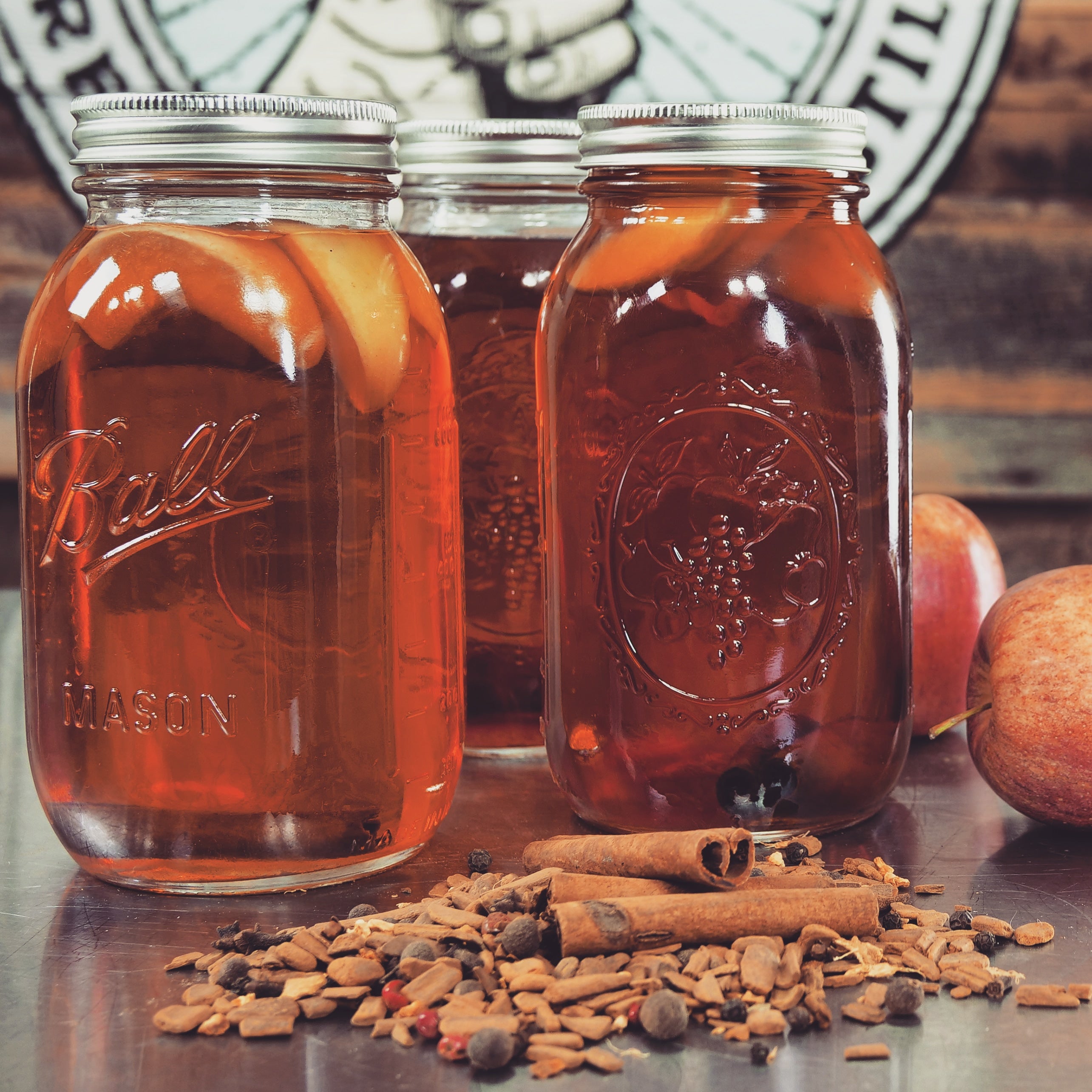
“Apple Pie Moonshine Recipe” from www.clawhammersupply.com and used with no modifications.
Apple pie moonshine has become legendary in home brewing circles, and for good reason—it perfectly captures the essence of America’s favorite dessert in liquid form. The warm spices, sweet apple, and hint of caramelized sugar create a nostalgic flavor profile that appeals to almost everyone. For those interested in experimenting with different spices for infused moonshine, this recipe takes a bit more time and ingredients than our first two, but the results are well worth the effort. The finished spirit develops remarkable smoothness and complexity that belies its simple preparation.
Essential Spices and Ingredients
For this beloved classic, you’ll need 750ml high-proof clear alcohol, 4 cups of pure apple cider (not apple juice), 4 cups of apple juice, 1 cup brown sugar, 1 cup white sugar, 4 cinnamon sticks, 2 teaspoons whole cloves, 2 whole star anise pods, and 1 teaspoon freshly grated nutmeg. The combination of apple cider and juice creates depth—cider provides robust apple character while the juice adds sweetness and clarity. The blend of warming spices evokes freshly baked pie, with cinnamon taking center stage backed by supporting notes from the other aromatics.
Preparation Method
Begin by combining apple cider, apple juice, both sugars, and all spices in a large pot. Bring to a gentle simmer over medium heat, stirring occasionally until the sugars completely dissolve. Reduce heat to low and simmer uncovered for 60 minutes, allowing the spices to infuse and the mixture to reduce slightly. Remove from heat and cool completely to room temperature—this cooling step is crucial, as adding alcohol to hot liquid will cause the alcohol to evaporate. For more information on the differences between spirits, check out this article on spirits and moonshine.
Once cooled, strain the apple mixture through a fine-mesh strainer to remove whole spices. Combine the spiced apple liquid with your high-proof alcohol in large mason jars, filling each about 3/4 full to allow room for expansion and mixing. Seal tightly and shake gently to combine. Unlike our previous recipes, apple pie moonshine benefits tremendously from aging—while it’s drinkable immediately, the flavor improves dramatically after 2-4 weeks of steeping as the elements meld and harsh edges soften.
Aging Tips for Best Flavor
While technically ready to drink after mixing, apple pie moonshine undergoes a remarkable transformation with patience. The first two weeks see the most dramatic changes, as the sharp alcohol notes mellow and integrate with the spiced apple flavors. Store your sealed jars in a cool, dark place during this initial aging period, gently inverting (don’t shake) every few days to ensure even flavor distribution. After two weeks, sample your creation—you’ll notice a markedly smoother, more integrated flavor compared to the freshly mixed version.
For truly exceptional results, age bottles for 2-3 months before enjoying. The extended aging allows the flavors to marry completely, resulting in a seamless flavor profile that rivals commercial products. Many enthusiasts make large batches in autumn when fresh apple cider is abundant, then enjoy their matured spirits throughout winter. The color will deepen slightly over time, and the flavors will round out beautifully, with any remaining alcohol harshness fading into the background.
4. Candy Corn Moonshine: A Sweet Seasonal Treat
“Candy Corn Moonshine Recipe – The …” from thesoccermomblog.com and used with no modifications.
Simple Two-Ingredient Recipe
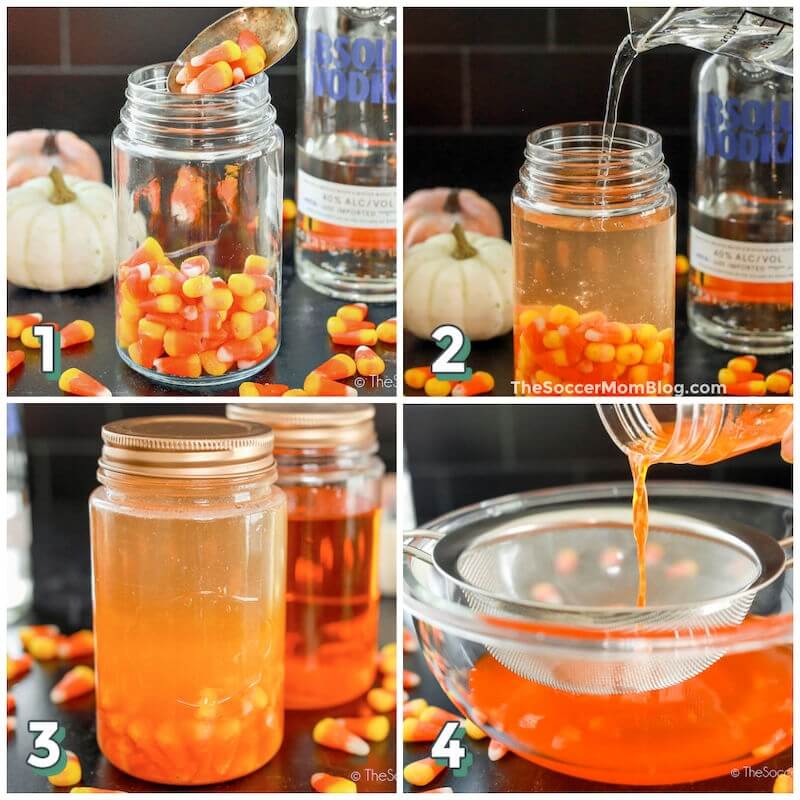
This whimsical seasonal treat transforms the divisive Halloween candy into a surprisingly delightful infused spirit. You’ll need just two ingredients: 750ml of clear high-proof alcohol and 2 cups (about 16oz) of candy corn. That’s it! The simplicity belies the complexity of the finished product, which captures the honey, vanilla, and marshmallow notes of the candy in liquid form. This recipe delights guests who expect a novelty but discover a legitimately tasty spirit with remarkable depth and nostalgic appeal. For more ideas on enhancing your moonshine, explore different spices for infused moonshine.
Steeping and Flavor Development
Add the candy corn to a large mason jar and pour the alcohol over it, leaving about an inch of headspace. Seal tightly and shake gently to ensure all candy is submerged. Unlike fruit infusions that maintain their integrity, you’ll watch as the candy corn gradually dissolves into the alcohol, creating a vibrant orange-yellow hue. The dissolution process is fascinating to observe—the candy breaks down layer by layer, releasing different flavors at each stage.
Allow the mixture to steep for 3-4 days, shaking gently twice daily to help dissolution. As the candy dissolves, it simultaneously flavors and sweetens the moonshine. The transformation is complete when all candy has dissolved, leaving a clear amber-orange liquid. No straining is necessary with this recipe since the candy dissolves completely, though you may notice a small amount of waxy residue at the bottom of your jar—simply pour carefully to avoid transferring this to your storage bottles. For more on enhancing flavors, check out these spices for infused moonshine.
Festive Serving Ideas
Candy corn moonshine makes a conversation-starting addition to Halloween and autumn gatherings. Serve it as chilled shots in small glasses rimmed with colored sugar, or create a Candy Corn Martini by mixing 2oz of your infusion with 1oz vanilla vodka and a splash of cream. For a dramatic presentation, layer candy corn moonshine with cream liqueur in clear shot glasses to mimic the tricolor appearance of actual candy corn. It also makes an unexpected addition to hot chocolate or coffee, adding sweet vanilla notes and festive color.
Gift-Giving and Presentation Ideas

“Give Gift Cards as Gifts {Gift Card …” from www.whatmommydoes.com and used with no modifications.
Homemade infused moonshine makes for thoughtful, personal gifts that friends and family treasure. The handcrafted nature and custom flavors show care and creativity that mass-produced gifts simply can’t match. For gift-giving, consider packaging your creations in attractive bottles with proper labeling indicating the flavor, alcohol content, production date, and any serving suggestions. A small tag with a cocktail recipe using your infusion adds an extra thoughtful touch that helps recipients enjoy your creation to the fullest. To get started with flavors, check out some spices for infused moonshine that can elevate your gift.
Decorative Jar Options
While mason jars have rustic charm, specialty bottles can elevate your moonshine’s presentation. Consider swing-top bottles for their secure seals and distinctive look, or vintage-style flask bottles for a prohibition-era aesthetic. Clear glass showcases vibrant colors of berry or apple pie moonshine, while amber or blue bottles provide UV protection for longer storage. For truly special gifts, antique decanters or etched glass bottles make a stunning impression. Always ensure bottles are thoroughly cleaned and completely dry before filling with your precious infusions.
Custom Labels and Tags
Well-designed labels transform homemade moonshine from casual experiment to polished gift. Create custom labels using waterproof label paper and a home printer, or for a rustic look, write on kraft paper tags tied to the bottle neck with twine or ribbon. Include essential information like the flavor profile, production date, alcohol content (approximate percentage), and your name as the distiller. For holiday gifts, coordinate label colors with the season, or add clever names like “Apple Pie Lightning” or “Berry Blitzen” for Christmas batches.
Beyond basic information, consider adding a short story about the recipe’s origin or inspiration. Personal touches like “Grandma Smith’s Apple Pie Recipe, Reimagined” or “Harvested from Our Garden Berries” create emotional connections and make your gifts memorable. For wedding favors or special events, custom labels with the date and occasion transform moonshine into cherished keepsakes that commemorate the celebration.
Take presentation further by packaging your moonshine with complementary items. Pair apple pie moonshine with cinnamon sticks and a small jar of cocktail cherries for an Old Fashioned kit, or include specialty glasses with your gift. Mason jar mugs make perfect companions for apple pie moonshine, while elegant cordial glasses complement berry or caramel varieties. These thoughtful extras transform your moonshine from mere gift to complete experience.
- Personalize tags with recipient’s name or inside jokes
- Add recipes for 2-3 cocktails using your infused moonshine
- Include storage recommendations and “best enjoyed by” dates
- Consider seasonal packaging—burlap for fall, ribbon for holidays
- Create gift baskets with complementary items like local honey, artisan chocolates, or cocktail accessories
The effort you put into presentation reflects the care that went into creating your infusions. Recipients recognize and appreciate this attention to detail, making your homemade moonshine gifts especially meaningful. Many home infusers find themselves receiving requests for “refills” year after year as friends and family eagerly anticipate their annual batch of specialty moonshine.

Frequently Asked Questions
As you embark on your moonshine infusion journey, questions inevitably arise. Here are answers to the most common concerns beginners have about creating homemade infused spirits. These practical insights help troubleshoot common issues and enhance your understanding of the infusion process, setting you up for consistent success in your home brewing adventures.
Remember that experimentation is part of the fun—while these guidelines provide a solid foundation, don’t be afraid to adjust techniques based on your personal preferences and experiences. The art of infusion rewards creativity and careful observation, with each batch teaching lessons that improve your next creation.
How long does infused moonshine last?
Properly stored infused moonshine with high alcohol content (over 20% ABV/40 proof) remains shelf-stable for 1-2 years or longer. The high alcohol percentage acts as a natural preservative, preventing bacterial growth. Fruit-based infusions generally have shorter optimal drinking windows (6-12 months) before flavors begin to fade or change, while spice and candy infusions can continue to develop pleasant complexity for years. Store bottles in cool, dark locations with minimal temperature fluctuations to maximize shelf life and maintain flavor quality.
Can I use any type of alcohol for these recipes?
While these recipes call for high-proof neutral spirits like Everclear, you can substitute other alcohols with understanding of how it affects the final product. Vodka (80-100 proof) works well but creates a less potent final product with slower extraction. White rum adds subtle sweetness that complements fruit infusions particularly well. Bourbon or whiskey bring their own vanilla and caramel notes, which can enhance or compete with your infusion ingredients—they work beautifully with apple and caramel recipes but may overwhelm delicate berries. Regardless of base spirit, higher proof options extract flavors more efficiently than lower-proof alternatives.
Is homemade infused moonshine legal?
Infusing commercially purchased alcohol is legal in most jurisdictions for personal consumption. What remains illegal without proper permits is distilling alcohol—the process of concentrating alcohol through evaporation and condensation. These recipes avoid legal issues by starting with legally purchased commercial spirits rather than creating alcohol through fermentation and distillation. Always check local regulations as laws vary by location, particularly regarding high-proof alcohol sales and gifting homemade alcohol products.
The distinction between infusion and distillation is important: infusion involves flavoring existing alcohol by soaking ingredients in it, while distillation concentrates alcohol by heating and recondensing. Our recipes exclusively use the legal infusion method, similar to making vanilla extract or limoncello at home. This approach allows you to create custom spirits without venturing into legally problematic territory.
Legal Status of Alcohol Activities:
Legal in most places: Purchasing commercial spirits, Infusing purchased spirits with flavors, Making beer/wine at home for personal use
Typically illegal without permits: Distilling spirits at home, Selling homemade alcoholic beverages, Transporting homemade distilled spirits across state lines
When gifting your infused creations, be aware that some jurisdictions have restrictions on giving alcohol as gifts or may require special permits for events where homemade alcohol is served. In most cases, sharing with friends and family for non-commercial purposes falls within personal use guidelines, but it’s always wise to understand local regulations.
Do I need to refrigerate my infused moonshine?
High-proof infusions (over 20% ABV/40 proof) don’t require refrigeration for safety reasons, as the alcohol content prevents microbial growth. However, refrigeration can preserve flavor quality, especially for fruit-based infusions which may otherwise gradually oxidize and lose brightness. Lower-proof creations (particularly those with added fruit juices or high sugar content) should always be refrigerated to prevent fermentation or spoilage. When in doubt, refrigeration extends the optimal drinking window for most infusions.
If you notice any signs of spoilage—off smells, visible mold, fermentation, or unusual cloudiness—discard the infusion regardless of alcohol content. These issues typically only occur with very low alcohol content or contamination during the infusion process. Using clean equipment, high-proof base spirits, and proper sealing during storage prevents most preservation problems.
Can I reuse the fruit after making infused moonshine?
The fruits used in moonshine infusions have given most of their flavor compounds to the alcohol, but they’ve also absorbed alcohol in return, creating boozy fruit that can be repurposed. These spirits-infused fruits make excellent additions to desserts—try them over ice cream, baked into cakes, or mixed into fruit compotes. Be aware that they retain significant alcohol content, so desserts made with infused fruit should be labeled accordingly, especially when serving to those who avoid alcohol.
Berry and stone fruits from infusions work particularly well in boozy jams and preserves. The alcohol content largely cooks off during the jamming process, leaving behind concentrated fruit flavor. Apple pieces from apple pie moonshine can be pureed and used as a flavorful sauce for pork dishes or desserts. Candy and caramel infusions generally leave little to repurpose, as these ingredients dissolve completely during the infusion process.
Experimentation is the heart of home brewing, and these beginner-friendly recipes provide just a starting point for your infusion journey. As you gain confidence, consider combining techniques—perhaps a caramel-apple fusion or berry-vanilla blend. Document your recipes, observations, and tasting notes to refine your approach with each batch. The world of infused spirits offers endless possibilities for creativity and personalization.
The satisfaction of creating something truly unique to share with friends and family makes homemade moonshine infusion a rewarding hobby. That moment when someone takes their first sip, eyes widening with surprise at the quality and flavor complexity you’ve achieved, makes all the effort worthwhile. From simple two-ingredient recipes to more complex seasonal creations, you now have the knowledge to craft exceptional spirits that reflect your personal taste and creativity.